


Do adhesive bandages have antibacterial properties? This is a question that many consumers and medical professionals often ask. As a leading supplier of adhesive bandages, I am here to delve into this topic and provide you with comprehensive information.
Understanding Adhesive Bandages
Adhesive bandages, also known as sticking plasters in some regions, are a common medical supply found in almost every household first - aid kit. They consist of a small, flexible pad attached to an adhesive strip. The primary purpose of adhesive bandages is to cover and protect minor cuts, scrapes, and wounds from dirt, bacteria, and further injury.
Types of Adhesive Bandages We Supply
We offer a wide range of adhesive bandages to meet different needs. For instance, our Bio Degradable Cohesive Bandage is an eco - friendly option. It is made from materials that can break down naturally over time, reducing environmental impact while still providing reliable wound protection.
The Elastic Cohesive Bandage is another popular choice. Its elastic nature allows it to conform to different body parts and provide a snug fit. This type of bandage is often used for sprains and minor injuries where some degree of compression is required.
Our Two Layer Compression Bandage is designed to offer more support and compression. The two - layer structure helps in controlling swelling and providing better stability to the injured area.
The Non Woven Finger Bandage is specifically designed for finger injuries. Its non - woven material is soft and gentle on the skin, and it can easily wrap around the finger to provide protection.
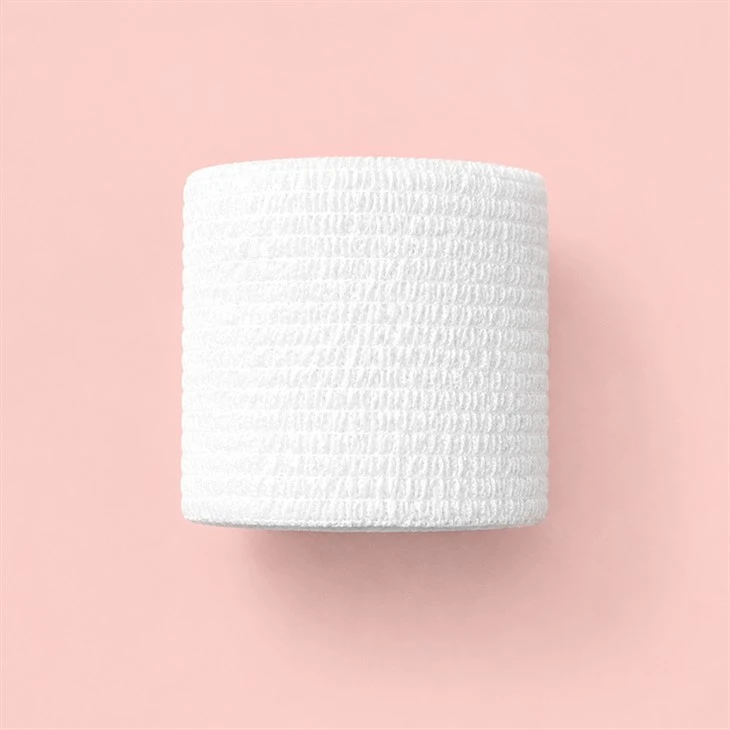
The Cohesive Conforming Bandage is highly versatile. It adheres to itself but not to the skin, making it easy to apply and remove. It can be used for various body parts and is often used in both medical and sports settings.


Antibacterial Properties of Adhesive Bandages
Not all adhesive bandages have antibacterial properties. Traditional adhesive bandages mainly serve as a physical barrier. They prevent external contaminants such as dirt, dust, and some bacteria from entering the wound. However, they do not actively kill bacteria that may already be present in the wound.
Some advanced adhesive bandages, on the other hand, are impregnated with antibacterial agents. These agents can help in reducing the risk of infection by killing or inhibiting the growth of bacteria. Common antibacterial agents used in bandages include silver, iodine, and certain antibiotics.
Silver has long been recognized for its antibacterial properties. It works by releasing silver ions that can disrupt the cell membranes of bacteria, inhibiting their growth and reproduction. Silver - impregnated bandages are particularly effective against a wide range of bacteria, including those that are resistant to antibiotics.
Iodine is another well - known antibacterial agent. It has a broad - spectrum antibacterial activity, meaning it can kill many different types of bacteria. Iodine - based bandages are often used in cases where there is a higher risk of infection.
The Importance of Antibacterial Bandages
In many cases, minor wounds can heal on their own without the need for antibacterial bandages. However, in certain situations, antibacterial bandages can play a crucial role. For example, in high - risk environments where the wound is more likely to be exposed to bacteria, such as in a hospital or a dirty workplace, using an antibacterial bandage can significantly reduce the risk of infection.
People with weakened immune systems are also at a higher risk of developing infections from wounds. For them, antibacterial bandages can provide an extra layer of protection. Additionally, for wounds that are slow to heal or show signs of inflammation, using an antibacterial bandage may help in speeding up the healing process.
How to Choose the Right Adhesive Bandage
When choosing an adhesive bandage, several factors need to be considered. Firstly, the size and location of the wound are important. For small cuts and scrapes on fingers, a Non Woven Finger Bandage may be the most appropriate choice. For larger wounds or areas that require compression, the Two Layer Compression Bandage could be more suitable.
Secondly, the risk of infection should be taken into account. If the wound is in a dirty environment or if the person has a weakened immune system, an antibacterial bandage is recommended. You can look for bandages that are labeled as having antibacterial properties or are impregnated with silver or iodine.
Finally, personal preferences and skin sensitivity also matter. Some people may be allergic to certain adhesives or antibacterial agents. In such cases, it is important to choose a bandage that is hypoallergenic and suitable for sensitive skin.
Our Commitment as a Supplier
As a supplier of adhesive bandages, we are committed to providing high - quality products. Our bandages are manufactured under strict quality control standards to ensure their effectiveness and safety. We continuously invest in research and development to improve the performance of our products.
For our antibacterial bandages, we use the latest technology and carefully selected antibacterial agents to ensure maximum protection against bacteria. We also pay attention to environmental protection, which is why we offer Bio Degradable Cohesive Bandage that are more sustainable.
Contact Us for Procurement
If you are interested in our range of adhesive bandages, whether for medical facilities, retail stores, or personal use in large quantities, we invite you to contact us for procurement. We offer competitive prices, flexible order quantities, and reliable delivery services. We are eager to discuss your specific requirements and how we can meet your needs.
References
- May, K. G., & Hunter, J. A. (2011). The use of silver dressings in wound management. Journal of Wound Care, 20(1), 26 - 32.
- Cutting, K. F., & Whitehouse, M. W. (2006). Iodine in wound management. Journal of Wound Care, 15(1), 12 - 17.
- Sibbald, R. G., Orsted, H. L., Romanelli, M., Ayello, E. A., Carville, K., & Leaper, D. J. (2010). Wound bed preparation: A systematic approach to wound management. International Wound Journal, 7(1), 1 - 28.