


Hey there! As a supplier of tubular bandages, I've gotten a ton of questions about how these nifty little products work. So, I thought I'd take some time to break it down for you in a way that's easy to understand.
First off, let's talk about what tubular bandages are. They're basically stretchy tubes made from various materials like cotton, polyester, or a blend of both. These bandages come in different sizes and thicknesses, and they're used for a wide range of applications, from medical uses to industrial and even some pretty unique uses you might not expect.
How They Work in Medical Settings
In the medical field, tubular bandages are super handy. They're often used to hold dressings in place on wounds. When you've got a cut or a scrape, you don't want the dressing to fall off, right? That's where tubular bandages come in. You simply slip the bandage over the area with the dressing, and its stretchy nature keeps it snugly in place.

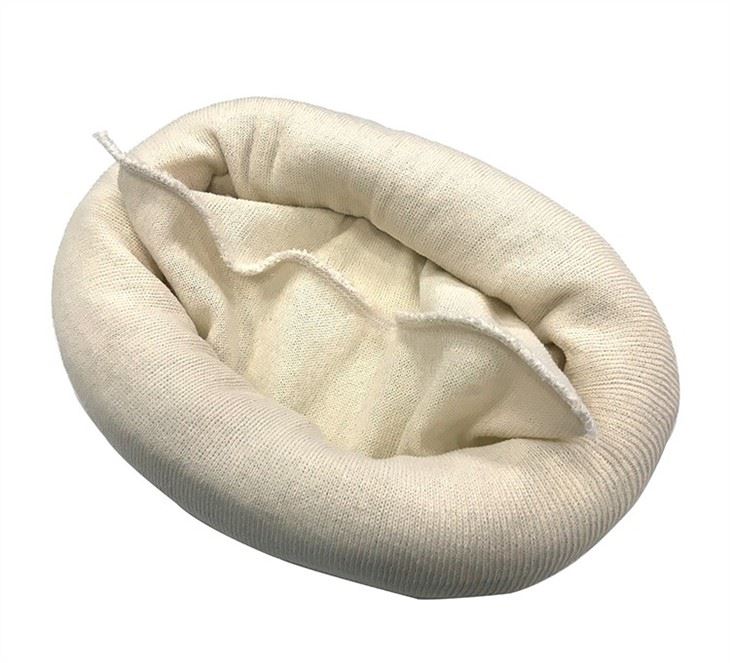
The stretch of the tubular bandage is crucial. It needs to be tight enough to hold the dressing but not so tight that it cuts off circulation. Most medical tubular bandages are designed with a specific amount of stretch that's been tested and approved for safe use on the body. This stretch also allows the bandage to conform to the shape of the body part it's covering. Whether it's an arm, a leg, or even a finger, the bandage will adapt to the contours, providing a secure and comfortable fit.
Another great thing about tubular bandages in medical settings is that they're breathable. The materials used in their construction allow air to pass through, which is important for wound healing. When a wound can breathe, it's less likely to get infected, and the healing process can happen more efficiently.
Industrial and Other Uses
But tubular bandages aren't just for medical use. In industrial settings, they can be used to protect cables and wires. You know how cables can get damaged from abrasion or other environmental factors? Well, slipping a tubular bandage over them can provide a layer of protection. The stretchy nature of the bandage allows it to fit tightly around the cables, staying in place even when the cables are moved or bent.
There are also some pretty unique uses for tubular bandages. For example, the Hunting Game Meat Wrap Bag is a specialized type of tubular bandage. Hunters can use it to wrap up game meat. It helps keep the meat clean and protected during transport and storage. The stretchy material conforms to the shape of the meat, providing a tight seal that keeps out dirt and debris.
Gel Tube Bandages
Now, let's talk about Gel Tube Bandage. These are a bit different from regular tubular bandages. They have a gel layer inside the tube. The gel can have various properties, depending on its formulation. For example, some gel tube bandages are designed to provide a cooling effect. This can be really helpful for treating burns or inflamed areas. The gel conforms to the body part just like the bandage itself, and the cooling sensation can help reduce pain and swelling.
Other gel tube bandages might have antibacterial properties. This is great for wound care because it can help prevent infection. The gel acts as an additional barrier between the wound and the outside environment, while the bandage holds everything in place.
Two - Way Stretch Tubular Bandages
The Two Way Stretch Tubular Bandage is another interesting product. As the name suggests, it has stretch in two directions. This makes it even more versatile than regular tubular bandages. In medical applications, it can be used on areas of the body that move a lot, like joints. The two - way stretch allows the bandage to stretch and move with the joint without losing its shape or coming loose.
In industrial uses, a two - way stretch tubular bandage can be wrapped around irregularly shaped objects more easily. It can adapt to both the lengthwise and widthwise dimensions of the object, providing a more secure fit.
How to Apply Tubular Bandages
Applying a tubular bandage is pretty straightforward. First, you need to choose the right size. If it's too small, it'll be too tight and uncomfortable, and if it's too big, it won't stay in place. Once you've got the right size, you simply stretch the bandage open and slip it over the area you want to cover.
If you're using it in a medical setting and there's a dressing involved, make sure the dressing is properly placed first. Then, carefully slide the bandage over the dressing. You might need to adjust it a bit to make sure it's centered and covering the area evenly.
Quality and Safety
As a supplier, I take quality and safety very seriously. All of our tubular bandages are made from high - quality materials that meet strict standards. We test our products to ensure that they have the right amount of stretch, are breathable, and are safe for use in their intended applications.
Whether you're a medical professional, an industrial worker, or someone with a unique need for tubular bandages, you can trust that our products will do the job.
Why Choose Us as Your Supplier
We've been in the business for a long time, and we've built a reputation for providing top - notch tubular bandages. We offer a wide range of products, including the ones I've mentioned like the Gel Tube Bandage, Hunting Game Meat Wrap Bag, and Two Way Stretch Tubular Bandage.
Our prices are competitive, and we have a great customer service team that's always ready to help. If you have any questions about which product is right for you or how to use them, just give us a shout.
Get in Touch for Procurement
If you're interested in purchasing tubular bandages, we'd love to hear from you. Whether you need a small quantity for personal use or a large order for your business, we can accommodate your needs. Just reach out to us, and we'll start the procurement process. We're here to make it as easy as possible for you to get the tubular bandages you need.
References
- Medical Textbooks on Wound Care
- Industrial Safety Manuals on Cable Protection
- Product Testing Reports from Our Manufacturing Facilities